Services
–
Your safety is our utmost priority. We have a comprehensive list of services to ensure that your workspaces and establishments are structurally safe and sound. We also have post-earthquake structural services that will assess, inspect, test and certify the structural integrity and safety of buildings and properties or provide retrofitting and renovation based on our professional and technological assessment.
Structural Assessment Services
Non-destructive testing (NDT)
Non-destructive testing (NDT) is a set of testing and analysis processes used to evaluate the quality and structural integrity of materials, components, structural members or systems with minimal or no damage to the structure.
Visual Inspection
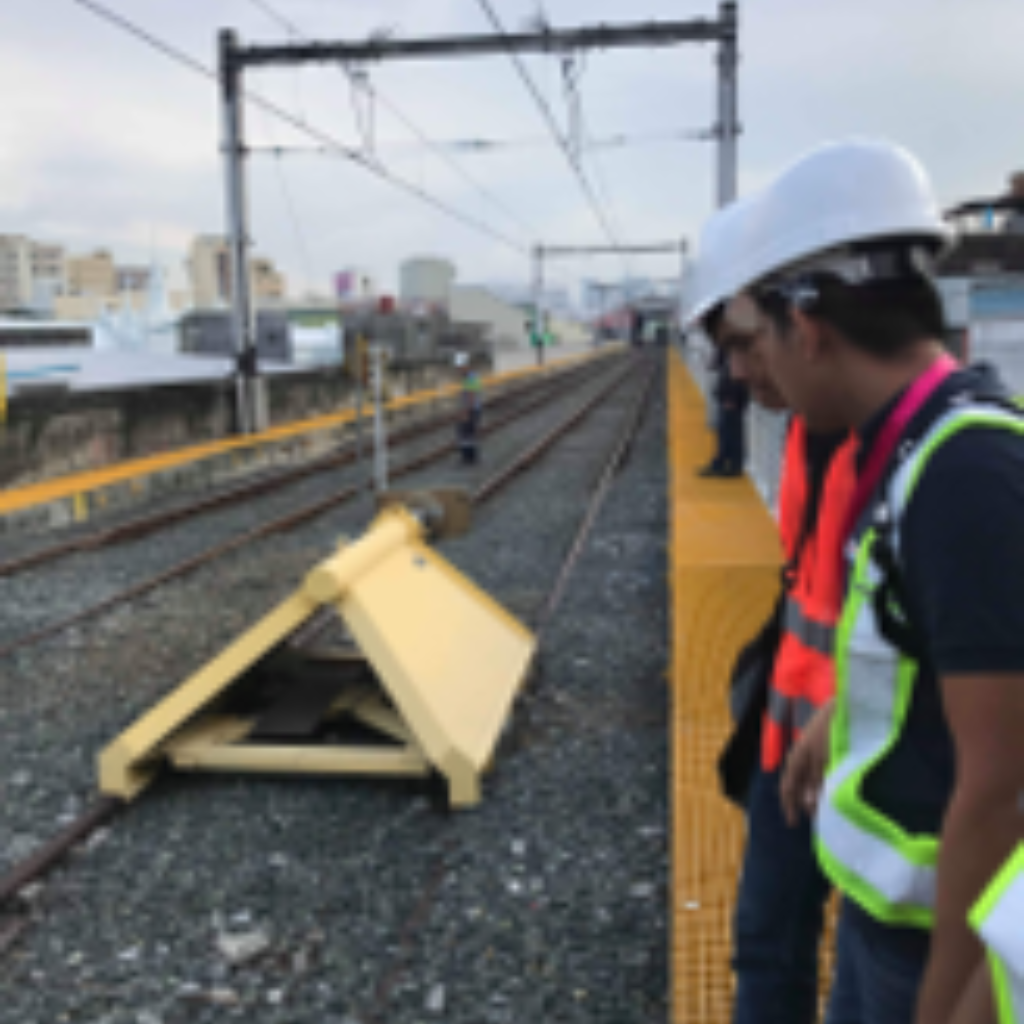
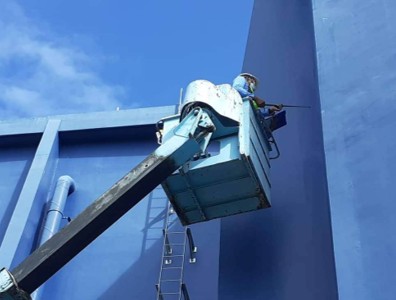
Visual inspection is a fundamental method for assessing the condition of a structure, identifying defects, and determining potential structural failures. It is a cost-effective and practical approach to detecting early signs of deterioration, including deflection or bending or displacement of structures, cracks, corrosion, and deformation.
Crack Mapping
Crack mapping is a crucial technique used in structural assessment to document and analyze cracks in buildings, bridges, and other structures. It involves identifying, measuring, and recording the size, location, and pattern of cracks to assess structural integrity and determine potential causes of damage.
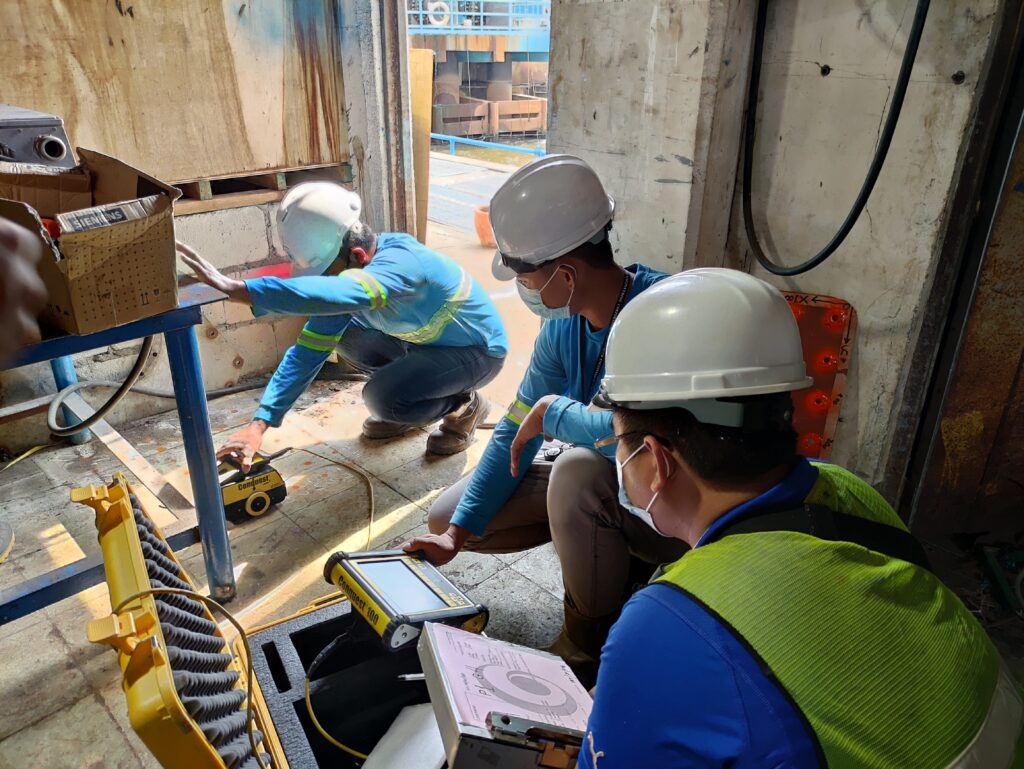
Rebar Scanning Using Ferroscan
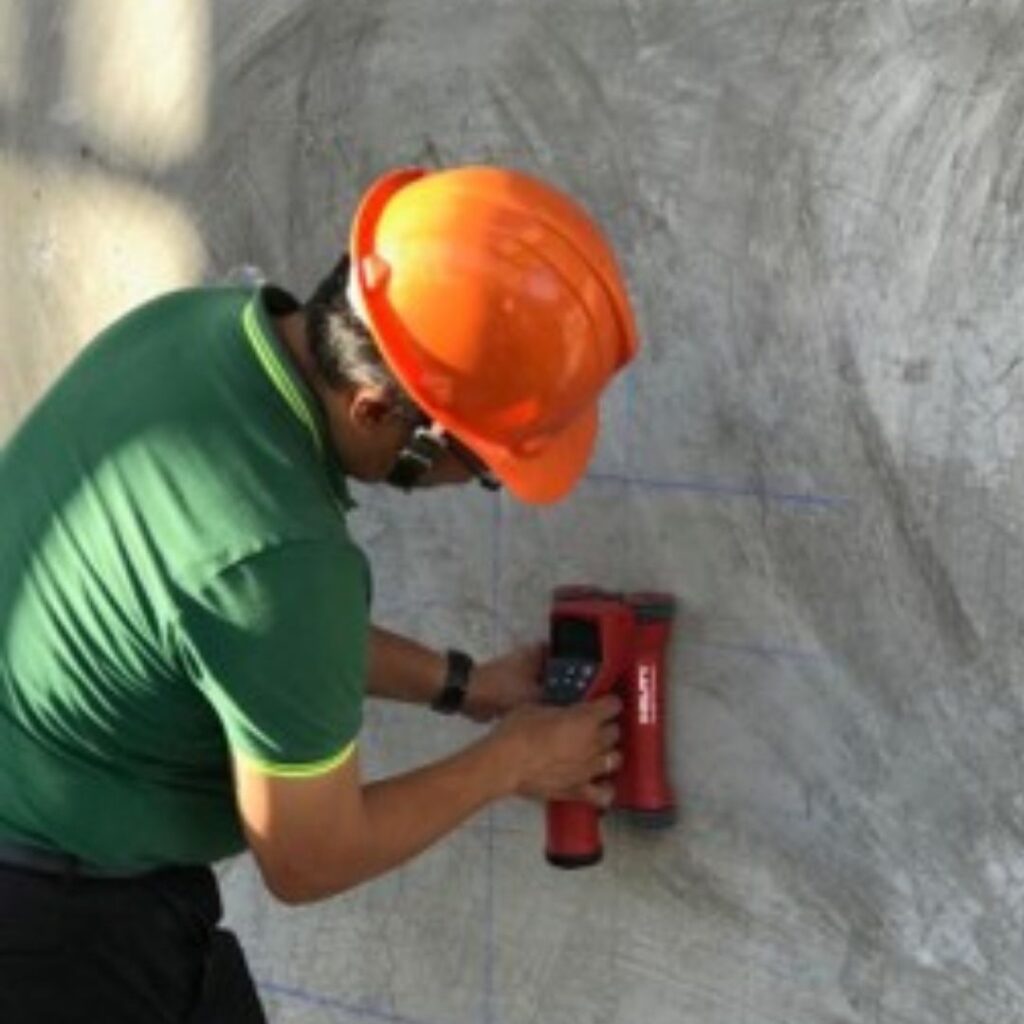
Rebar scanning, or reinforcing bar scanning, is a non-destructive testing (NDT) method used in structural assessment to locate and assess reinforcement bars within concrete structures. One of the most common tools for this process is Ferroscan, which helps engineers and inspectors determine the positioning, depth, and size of embedded reinforcement bars without damaging the structure.
Rebar Scanning using Ground Penetrating Radar (GPR)
Ground Penetrating Radar (GPR) is a non-destructive testing (NDT) method used in structural assessment to detect and map reinforcement bars (rebar) embedded in concrete structures. GPR is widely used in bridge inspections, building evaluations, and retrofitting projects to assess reinforcement details without damaging the structure or having to physically chip off concrete to see the core of the structure.
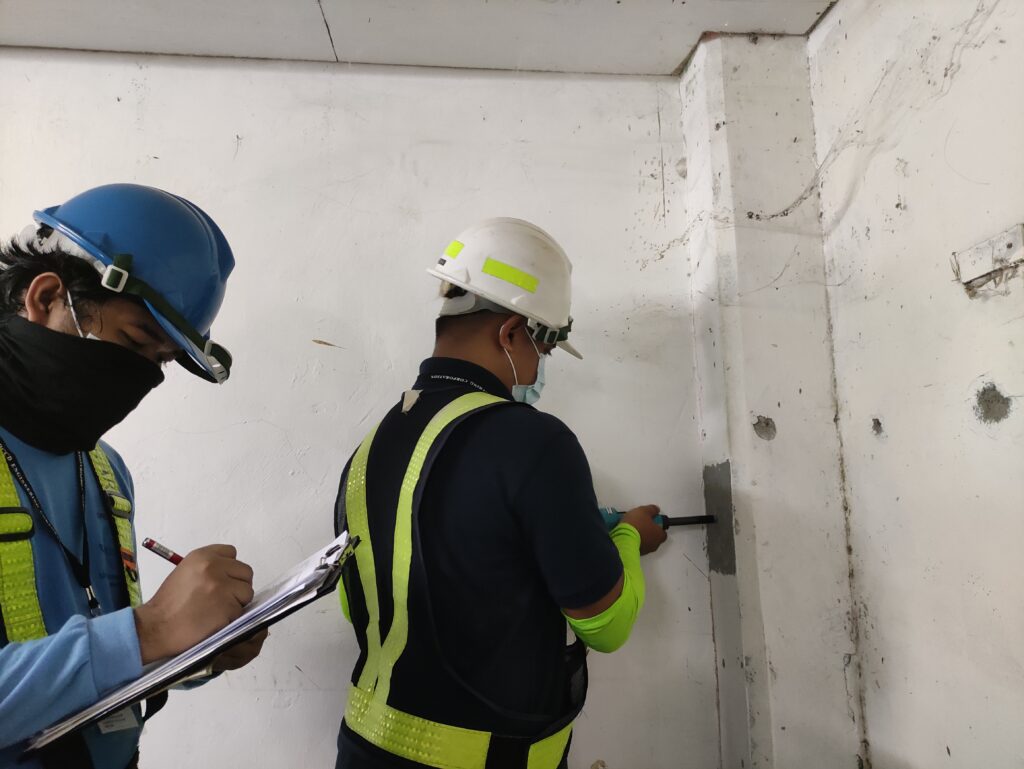
Rebound Hammer Test for Concrete Strength Determination
The Penetration Resistance Test, commonly conducted using a PPR-Meter (Probe Penetration Resistance Meter), is a non-destructive testing (NDT) method used to estimate the in-situ compressive strength of concrete. This method evaluates the resistance of concrete to penetration by a steel probe or pin, correlating the penetration depth to concrete strength. The PPR-Meter measures the depth of penetration of a steel probe or pin fired into the concrete using a controlled impact force. The depth reading is then correlated with standard strength charts to estimate compressive strength.
Destructive Testing
Non-Destructive Testing (NDT) methods like Rebound Hammer, PPR-Meter, and Rebar Scanning provide quick and non-invasive ways to assess concrete structures. However, their results are only estimates and may require Destructive Testing (DT) to verify accuracy.
Below is a comparison of NDT methods and their corresponding Destructive Testing verification methods
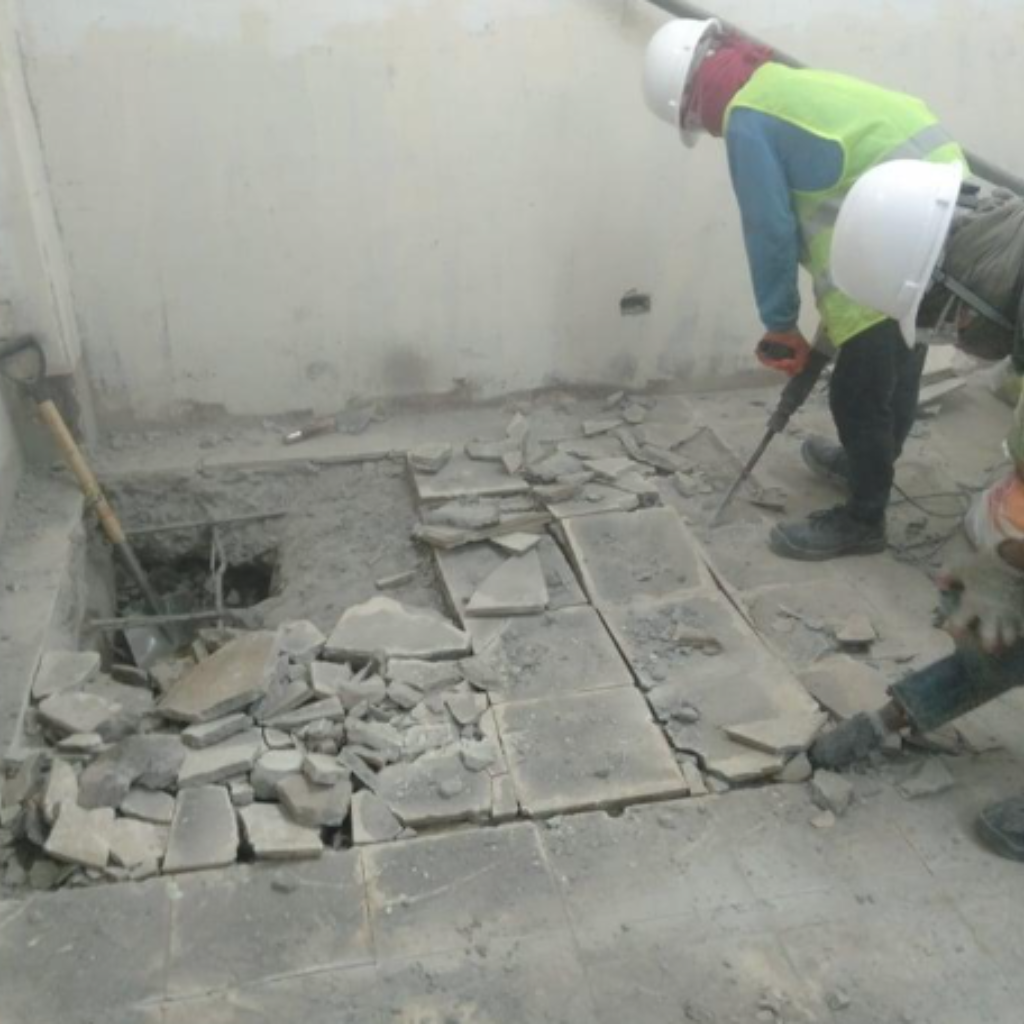
Concrete Breakout Test
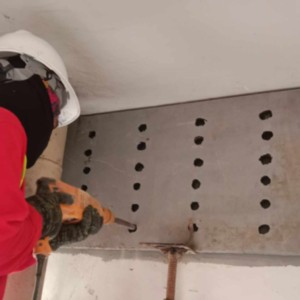
Rebar scanning using Ferroscan, Ground Penetrating Radar (GPR), or Profometer provides a non-destructive method to locate reinforcement bars (rebar) within concrete structures. However, since these scanning techniques rely on electromagnetic signals or radar reflections, their accuracy can be affected by concrete cover, rebar congestion, or interference from other embedded materials. To verify the accuracy of rebar scanning results, a Concrete Breakout Test (also known as partial chipping, controlled exposure, or concrete removal test) is performed as a destructive verification method.

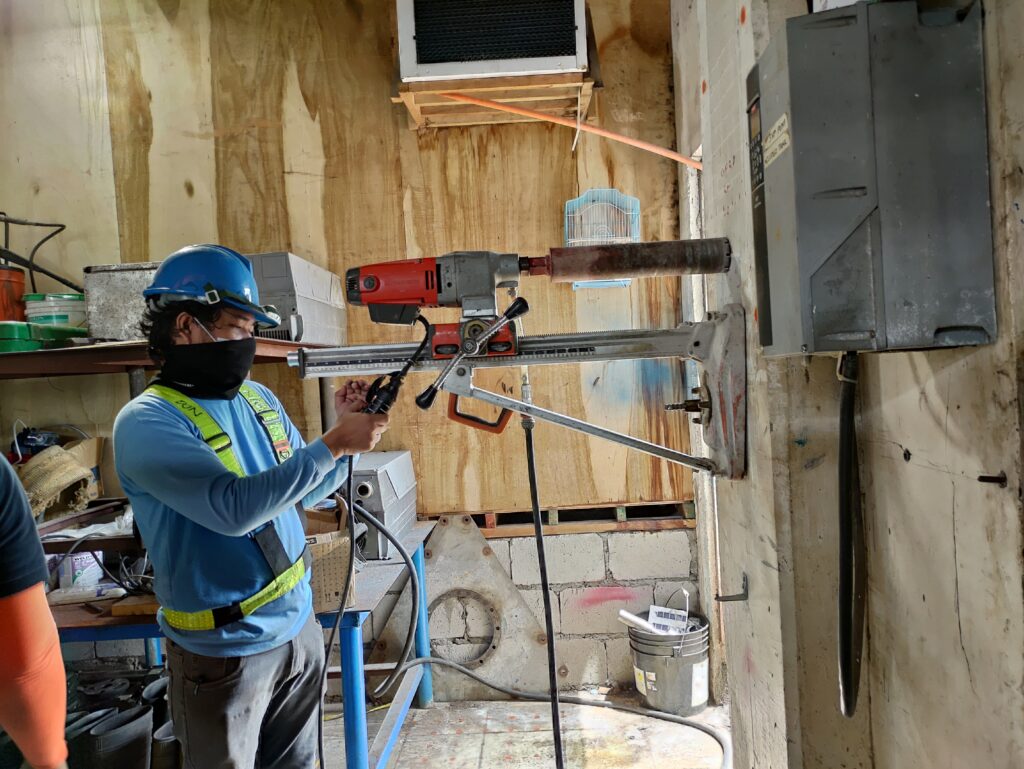
Concrete Coring
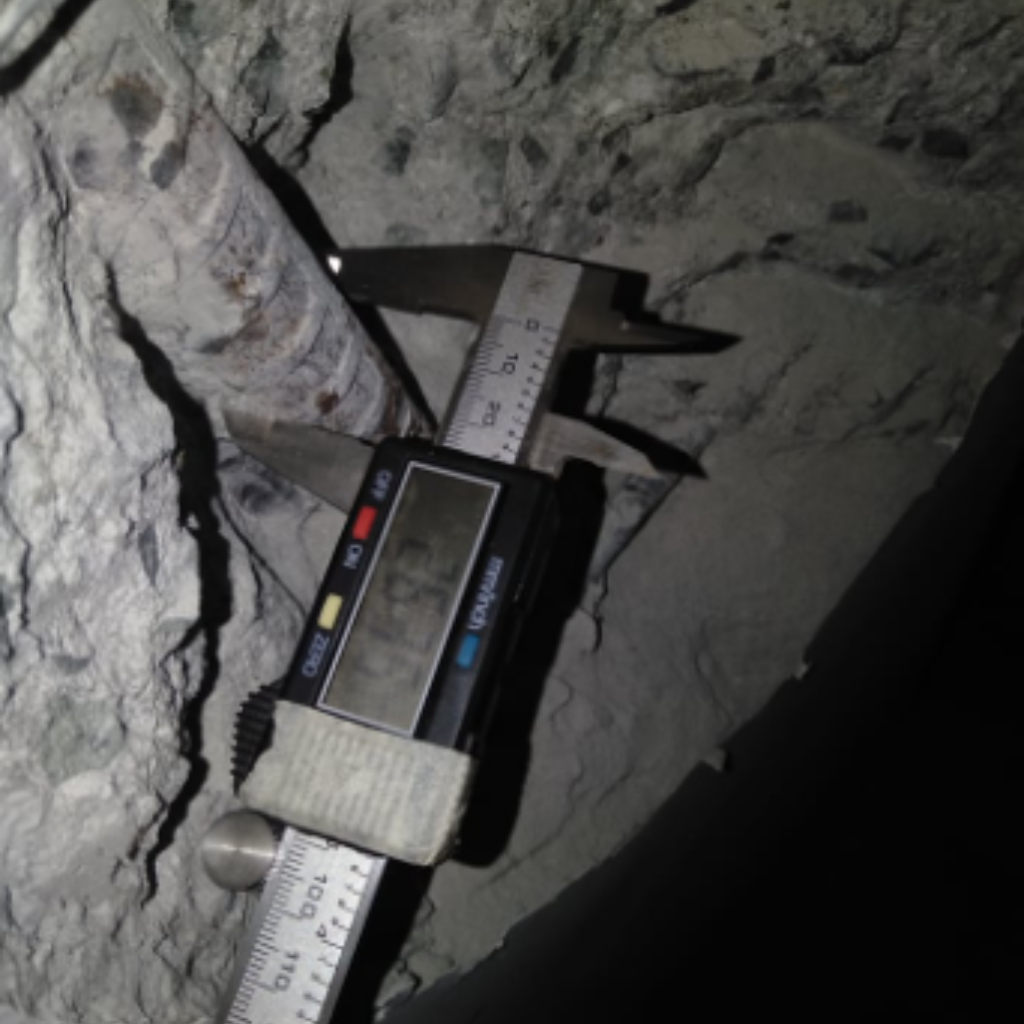
Concrete coring is a destructive testing (DT) method used in structural assessment to obtain core samples for laboratory testing. It is the most reliable method for determining the actual in-situ compressive strength of concrete and is often used to verify results from Non-Destructive Testing (NDT) methods like the Rebound Hammer and PPR-Meter.
Foundation Test Pit or Foundation Exposure
Foundation exposure, also known as a foundation test pit excavation, is a destructive testing (DT) method used in structural assessment to determine the actual size, depth, and condition of a foundation or footing. This method involves excavating soil around the foundation to directly inspect and measure its dimensions, and material condition.
Structural Retrofitting
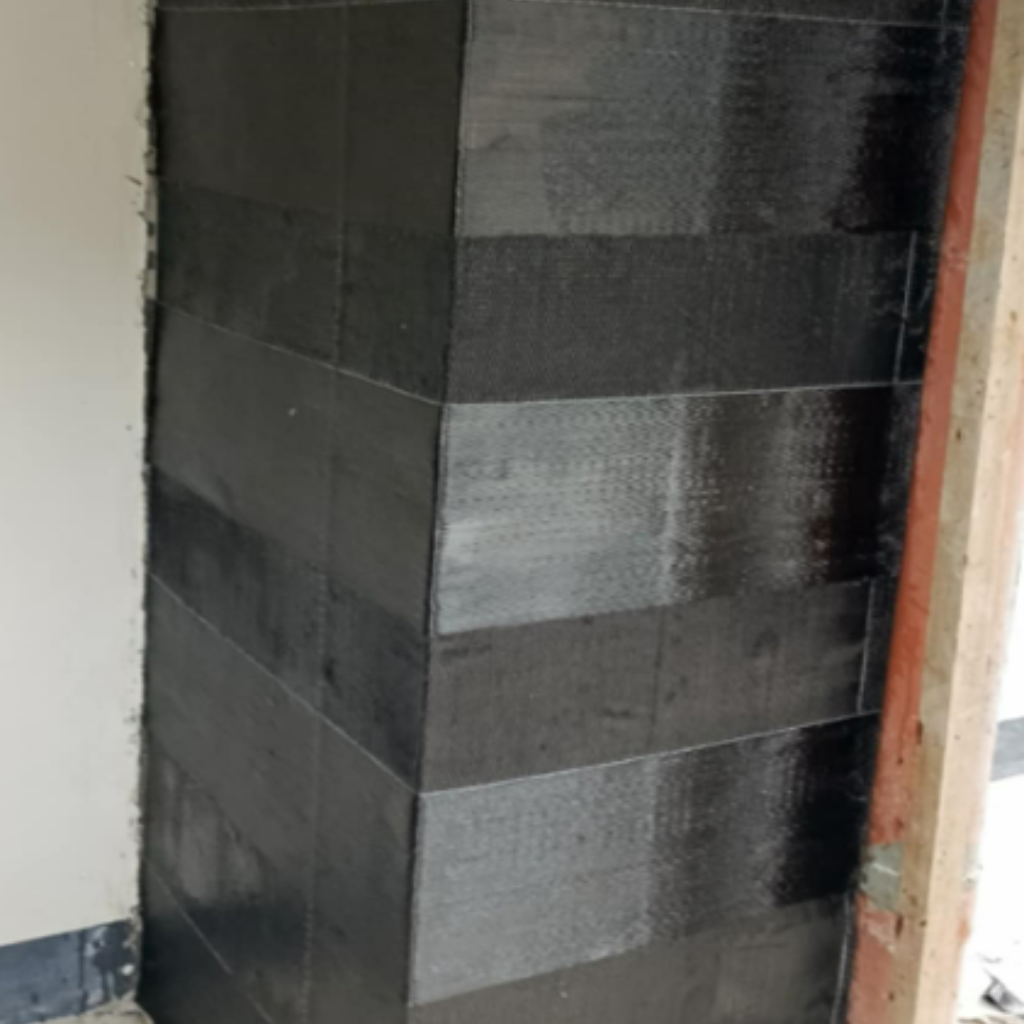
Carbon Fiber Reinforced Polymer (CFRP) Application
Strengthens beams, columns, and slabs without adding significant weight.
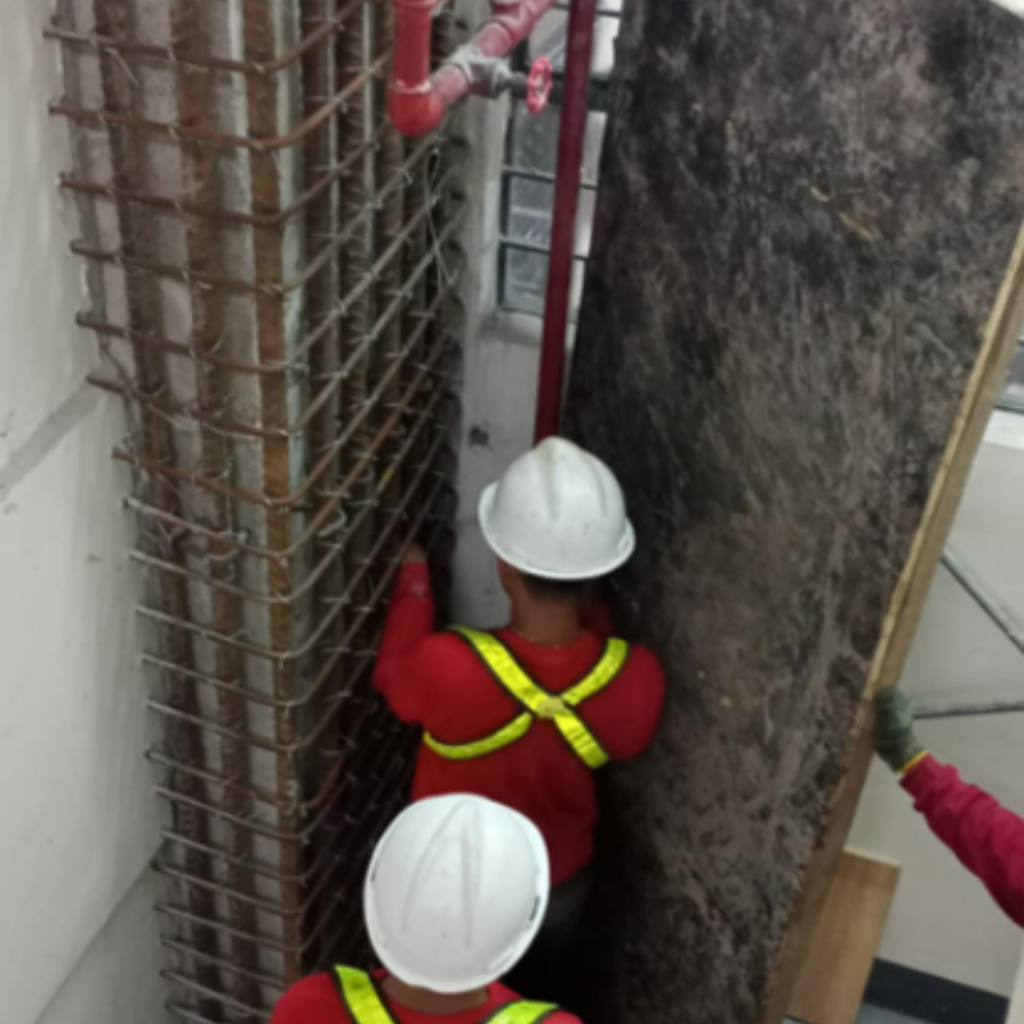
section enlargement / concrete jacketing of beams, columns and footings
Increases load capacity by enlarging structural elements.
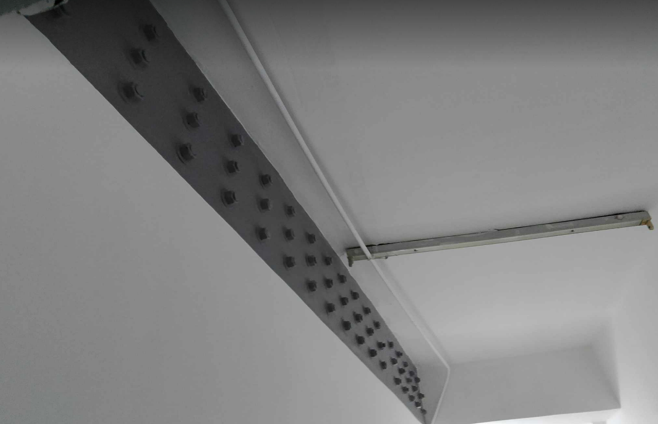
Steel Jacketing for Columns and Beams
Strengthens existing RC columns and beams by adding external steel plates.
Addition of Steel Bracings
Strengthens the entire structural frame by adding stiffness and reducing lateral displacement.
Concrete Crack Repair
Restores strength and integrity to cracked structural elements.
Introduction of New Shear Walls
Improves lateral load resistance and controls excessive sway in buildings.
construction
We have the expertise and decades-long experience in designing and building a variety of projects – offices, business establishments, factories, government infrastructure and land development of subdivisions.
- Construction
- Renovation or Fit-out
- Structural Retrofitting
- Land Development
- Road Construction and other civil works
- Project Management